
Burnout syndrome
Have you been asking yourself these questions lately?
- “Do they appreciate me at work?”
- “Why did I say ‘yes’ to a task that makes no sense?”
- “How did my dream job become a source of stress?”
If the answer is “yes,” it’s time to check if you’re experiencing burnout. Here you will find a short questionnaire that will help you understand more about your emotional state.
What is burnout?
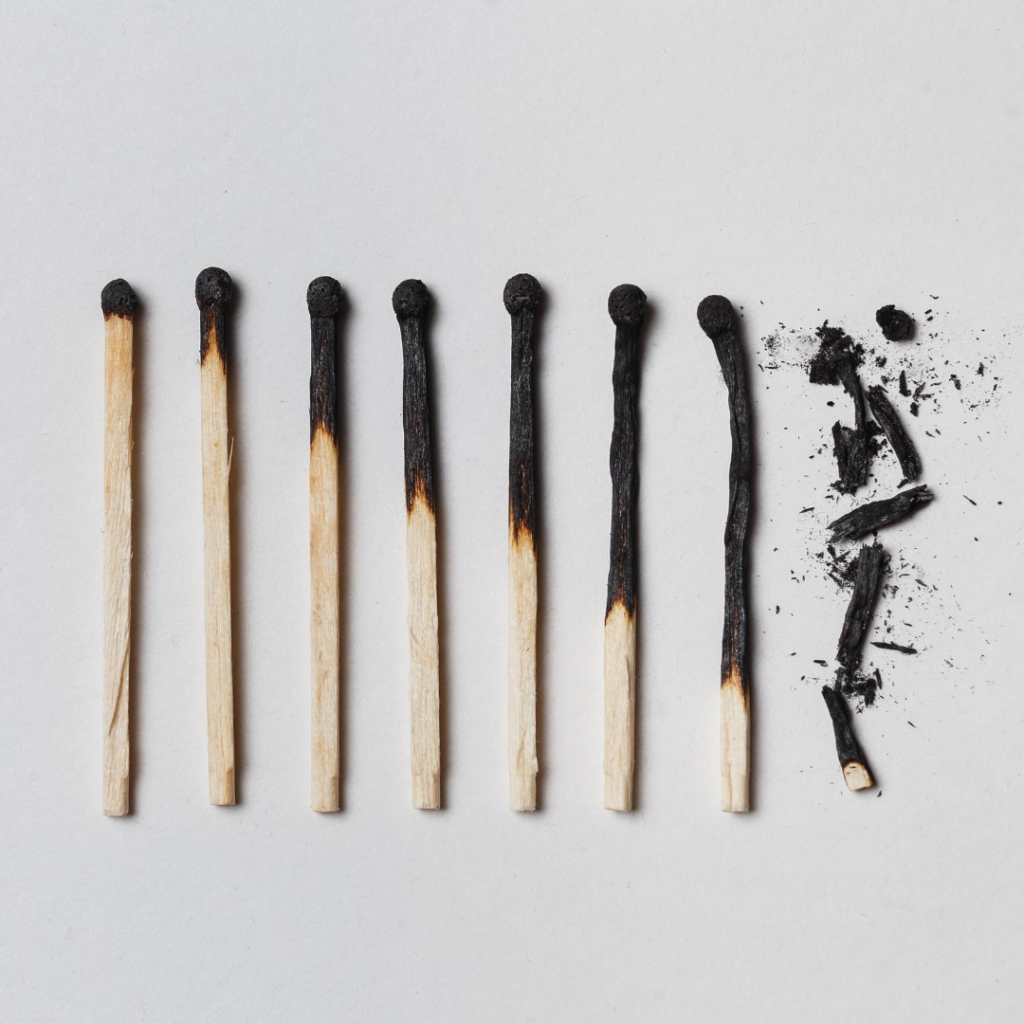
Burnout is a state of exhaustion, most often associated with work and the stress that comes with it, which can affect the body, mind, and emotions. This is not just “tiredness” after a long week; it is a long-term process of exhaustion, cynicism, and reduced professional effectiveness.
- Chronic fatigue: physical and emotional exhaustion, lack of energy.
- Cynicism and detachment from work: feeling distant from tasks and people.
- Reduced professional effectiveness: feeling unable to cope with tasks even when you are making an effort.
- Burnout can manifest itself in many different roles—students, pupils, parents, etc. It is most common in the helping professions—teachers and doctors—but of course it can be found anywhere.

Symptoms (divided into categories)
- Physical: chronic fatigue, lack of sleep, headaches, muscle tension, frequent infections, sleep problems (increased sleepiness, difficulty falling asleep).
- Emotional: restlessness, irritability, apathy, anxiety, depressive feelings.
- Cognitive: difficulty concentrating, forgetfulness, low productivity, pessimistic thinking.
- Behavioral: avoidance of new tasks, social isolation, changes in appetite or sleeping habits, irritability.
Risk factors
- Constant stress at work or school, lack of balance between work and personal life.
- High expectations of oneself and perfectionism.
- Lack of clear boundaries and support from bosses, colleagues, or loved ones.
- Excessive responsibility towards others (caring for others) without time for oneself.
- Low self-esteem, negative automatic thoughts, and low tolerance for uncertainty.
- Unhealthy sleep habits, excessive caffeine/alcohol consumption, lack of physical activity.
How to cope: Practical approaches
(CBT/ Cognitive Behavioral Therapy)
Setting boundaries and priorities
- Learn to say “no” and delegate tasks.
- Review your to-do list and focus on the most important tasks—prioritize.
Rest and recovery plan
- Include regular short breaks during the day (5–10 minutes) for breathing/stretching.
- Add at least one long day for complete rest each week.
Maintaining a routine for sleep and physical activity
- Go to bed and wake up at regular times; limit screen time before bedtime.
- Moderate physical activity almost every day; even a 20–30 minute walk improves energy and mood.
Techniques for managing anxiety and thoughts
- Cognitive restructuring: identifying and challenging automatic thoughts such as “I must be perfect.” Cognitive behavioral therapy can help with this.
- Breathing exercises and progressive muscle relaxation for rapid stress reduction.
Social support
- Share your feelings with loved ones or colleagues, seek out a support group or counseling.

When to seek help
- If you have been feeling exhausted and overwhelmed for several weeks now.
- If these experiences interfere with your daily functioning (you stop working, don’t go out, don’t shower, etc.)
- If excessive self-critical thoughts arise, as well as feelings of despair and helplessness.
- With the code OCTOBER50 (valid only during October 2025), you can enjoy a 50% discount on your first visit to Medcross psychotherapist Margarita Koleva.
How should we conclude this article? With a little positive note?
Burnout syndrome can be managed through a combination of lifestyle changes, stress management skills (stress cannot be eliminated, only managed), and, if necessary, professional support.


